
News and Blogs

Primacy Chapter 1

montana-1829251_1920

The Primacy of God

“Every good and perfect gift is from above, coming down from the Father of the heavenly lights…” James 1:17

Chapter 1

By now hopefully, you’ve deduced how important it is to discover your real identity.

Finding your authentic self is key to:

  • Accomplishing everything you’re hoping and dreaming
  • A big shortcut to lowering your stress
  • A major cornerstone for the entire Path of the Postmodern Cleric

Let’s call ‘real identity’ Secret #2, even though I’m misusing the term “secret,” because no one is hiding it from you. I’ve seldom talked to anyone who wouldn’t admit that identity questions need answers early in your life and often need to be redefined repeatedly throughout your life.

So why didn’t I start there? I purposefully wrote Primacy of God first because it’s even more foundational and even more overlooked as a secret to an abundant Christian life. Without understanding the secret of God’s primacy you’ll quickly hit a glass ceiling in your pilgrimage toward the Promised Land. For lack of understanding God’s primacy the children of Israel circled the wilderness for 40 years before getting another attempt at something they wanted—and God wanted for them.

Let that sink in. What can possibly hold back a blessing that God wants to give you and you want to accept? How heartbreaking to march in circles when everything is lined up and ready for the big win.

I’m going to get right into Primacy in this chapter, but I have to first tell you how I stumbled into this secret.

I came across secret #1 because I was frustrated by conversations I had with local institutional Christians. For every authentic person who loved the Lord with all their heart, I found two who had a religion instead of a relationship with God. I started having tough conversations with God and, of course, He started talking about something else entirely. I notice in my conversations with God that he doesn’t stick to my agenda. Like when the disciples asked Jesus the theological question of the day regarding a blind man, “whose sin resulted in his blindness from birth, his own future sin or past sins of his parents?” Jesus responded, “you’re asking the wrong question. All that matters is how can the Kingdom be glorified?” Then he restores the man’s sight. (John 9).


Quick side note here—the disciples aren’t shamed by Jesus. It’s not wrong to take whatever I’m thinking or feeling to God. In fact, it’s exactly the right thing to do. It’s being childlike. I think we’d heal much faster if our response to “negative” emotion was to drag it in front of God. Pretend for a moment that God isn’t shocked by your anger, hate, disappointment, lust, impatience, etc. He actually understands sin, and He’s kind of over it. He gave his son to fix it, and I think we’re often throwing all this in his face by trying to clean up our own mess before we bring it to him. Nothing says thanks for Jesus, but no thanks, for trying to handle your own problem.


So I’m having this conversation with God, telling him how frustrating people are, and he says, “They don’t know me.”

That was an eye-opener. Did God really just boil sin down to simply not knowing him? I didn’t quite know what to do with that, so I let in compost in my brain for a while.

A day or two later another ingredient came from God when I read a book about process management titled, “The Novel,” by Eli Goldratt. It’s a good read. The author treats processes according to the laws of fluid dynamics and draws an interesting set of principles out of it, creating the Constraint Theory of Management.

Reading that book, which is in no way a Christian inspirational book, put an idea in the compost pile of my brain next to God’s comment.

Later a mentor of mine spoke about the concept in James 1:17. All good things come from God and nothing good comes from anywhere else. This was the third item in the compost pile that really brought the heat.

Part of my identity, my superpower, is smashing things together unrelated things and seeing a new thing created in the mess and destruction.

So God began drawing on threads in the back of my brain. I realized that, if I wanted more good things in my life, and God was the source of good, there had to be one or more things constraining my ability to receive those things.

Over the course of the next five years I journeyed with God pushing for more about this topic, and it opened up so many amazing things that I could write for the rest of my life just on the topics I’ve already explored.

Imagine for a moment that you want to pick tomatoes from your garden, but they never seem to grow. They get plenty of sunshine and fertile soil. You decide they aren’t getting enough water. So you drag a hose over and turn it on. A trickle of water comes out. You double check that the water is on, and it is. Then you start looking for kinks in the hose. You find about ten. Even when you straighten them out, nothing seems to be coming out the hose. The more time you spend with it the more frustrated you get. You’re throwing good time after bad, and even if you get the water on you still need the tomatoes to grow. You feel powerless. You feel discouraged.

Then it hits you. You had this problem last year and decided the hose was beyond repair. You bought a new hose. In fact when you check you find water flowing out the new hose into the street and down the storm drain.

You didn’t throw away the old hose. Why on earth would you keep the old hose? I’ll tell you. Because part of you still identifies with that hose. It’s the only hose you’ve ever known.

Alright, I’m not talking about hoses anymore. Clearly, I’m talking about a human life. We get a new life in Christ, this shouldn’t be news to anyone. But when we’re stuck in the wilderness it’s about letting go of our slave identity. Leadership in Egypt (the world) is about doing the work and receiving just payment. As in just the minimum, they can give you to sustain you. It’s an abusive have/have-not relationship.

man-1246233_1920Leadership in the Kingdom is servants leading and leaders serving. It’s counter-intuitive to the mind stuck in slave mode. The wilderness is about literally dying to a mindset of slavery. God isn’t being a jerk when he doesn’t let you into the Promised Land as an imperfect human. It’s not about your perfection at all. It’s not about anything you do or fail to do. That’s slave mindset right there. You actually can’t enter the Promised Land with the mind of a slave. It’s a new Kingdom. You must submit yourself to the King or you can’t be received into the His Kingdom.

I’m not saying you won’t go to Heaven for lack of figuring this out. Not at all, remember the Promised Land isn’t Heaven. It’s abundant life. It’s being the real you by living as the restored person not the old hose, er, I mean the old dead sinner who can’t be a conduit for the glory of God.

The Promised Land isn’t Heaven. It’s abundant life.

That’s a rough statement and I’d get yelled at if I left it there. I know God uses broken sinners to do amazing things. Absolutely! In fact, that’s a big part of entering your Promised Land, launching imperfect and unprepared.

It’s not about your being prepared. It’s not about your status as a sinner. It’s not about how long you’ve been walking with God, who your mentors are, or even of which truth God has convicted you, or how well you can convince others that your truth is the “real truth.” It’s not about any form of religious sophistication or achievement. You can’t earn the Promised Land. It’s a gift.

Whew! Seriously Andy, what are you on about? Stop telling me what it’s not and tell me Secret #1 already!

The very first constraint preventing abundance in your life is using the wrong hose. It’s realizing that your new life is an intimate partnership between you and God through the sacrifice of Jesus Christ. You enter the Promised Land when you can carry the presence of God with you into the face of what you know you can’t do in your own strength.

Sweet! There it is. Either you feel elated because you’re recognizing something you already knew but seeing it in a new light, OR you’re a little underwhelmed that I made such a big deal about something so obvious. Maybe you knew this but hadn’t thought about it in a while, is that really such a big deal? Why all the fuss?

Because when you read Chapter 2, I’ll tell you the number one reason people aren’t able to consistently remember Secret #1.

P.S. also you’ll discover core reason why Primacy comes before Identity.


This page under construction.

Expected update 4/13/2018

Back to Primacy Work in Progress (WIP) Page

Primacy – Introduction

american-river-1590010_1920

The Primacy of God

“People don’t need self-help, they need abundance.” – Andy Bunch

Introduction (Continued from WIP Page)

…This is my story…

I began my journey as Andy, a humble writer on an adventure. I didn’t know what I wanted but I knew something out there had to be better than doing what the world (or the church) told me to do. I came to adulthood a slave to fear and security. I seemed destined to be just another cog in the wheel, though deep inside I couldn’t accept it.

Now I’m Sir Andrew, Cleric of the Most High God.

If this all sounds kinda ridiculous, especially the part about being a Cleric, don’t worry. It’ll all make sense in a bit. It won’t ever get “normal,” but it’ll make more sense as you go. The path to a better life will never be normal or easy. It’s something that you must wade into and eventually, all becomes clear. I’m not asking you to blindly accept everything I’m saying. Healthy skepticism is great. Just have the courage to suspend your judgment for a bit, until you’ve seen enough to get the picture clearly.

So, why refer to myself as a cleric?* It’s worse than that, actually. I walk the Path of the Postmodern Cleric and some people seem to be allergic to the word postmodern. Let me reassure you I’m a Christian. Not just culturally, I have a relationship with God through my savior Christ Jesus and he is my guiding light. I base my belief system on the scriptures. I fellowship with a church community on a regular basis.

I’m not trying to dress up the old religion in fanciful terms either. I refer to things a bit differently because I believe in having a personal definition for things in my life and it makes it easier to track what God is leading me through versus the culturally accepted norm if I use a unique name for things I’ve redefined.

Out of Egypt

As I mentioned, I began as a slave in Egypt. Of course, I’m being metaphorical, but that’s another tool I value highly. God provided the stories of others to help us and the journey of the children of Israel is powerful. It represents our personal journey from sinner to a new life in Christ through grace. But in order to really benefit from that story, I had to learn three super valuable things about that metaphor.

  1. It wasn’t just sin (doing wrong) to which I was a slave. Sin was actually a symptom of thinking based upon disconnection from God. My goal in leaving slavery wasn’t just to live sin-free; which every Christian agrees isn’t possible in this lifetime. The reason to leave Egypt was to think and live as a child of God, with decisions based in who I am in Christ not the habits of someone cut off from God. Coming out of slavery is about sin losing it’s power to compel you.
  2. Time in the wilderness is about learning to follow God. It’s difficult to live as a free person because at every turn you risk death to remain free. Risking death is the context of freedom. Perhaps that’s more dramatic than it’s usually stated but learning to follow God is a pretty accepted interpretation of the wilderness and I mention it because it leads to my third point.
  3. Entering the Promised Land is not about dying and going to heaven. It’s about the shift from following God to carrying God’s presence with you through an upgraded identity. It’s very telling that after leading the people around the desert to freedom, Moses never went into the Promised Land. Still, we accept that Moses went to heaven. In fact at Christ’s ascension, Moses is probably one of the two men who come greet Jesus to accompany his return to Heaven. Somehow Moses’ sin kept him from the Promised Land but not from Heaven. That’s HUGE!

If that portion of the story applies metaphorically then it means all this sinning we keep doing doesn’t cost us heaven, but on the downside, it means Christians can leave slave-mindedness and follow God their whole lives and never inherit the full gift of grace—new identity as a vessel of God.

Moses had a very unique and intimate relationship with God. His authority over the people came from the manifest presence of God in a fiery cloud descending to a tent out front of the community where Moses went and hung out with God daily. Yet Moses referred to himself as the servant of God. In his entire life he went from born a slave, to adopted prince in a slave world, to criminal on the run because he tried to fulfill his calling in his own strength, to shepherd in his own personal wilderness, to servant who fulfilled his calling to lead the people out of slavery through God’s power. From slave to servant. What a powerful story. What a powerful journey. But he stopped his earthly journey at servant.

Our Journey

I’m on my own personal journey out of Egypt. I believe we (Christians) all are. I don’t want to stop short of the full glory of Christ in me. Jesus said in John 15:15, “a master doesn’t tell his servants what he’s up to, but I call you friend, for I’ve told you everything.” We’ve seen the climax of the story now, and it’s Christ’s death on the cross in substitution for our own.

I market this book, basically as Christian self-help. I don’t blame you if you’re wondering just what you bit off by reading it. A lot of times we take concepts of “secular world” and “baptize” them into a Christian version. This isn’t that, but it’s not a devotional either.

Self-help for Christians makes a great shorthand category for labeling this book because we all know what I’m trying to say even if it’s clearly oxymoronic (we wouldn’t be Christians if we thought we could help ourselves).

The Paradox

As Christians, we struggle with a painful tension created by that paradox. We want life to get better and Jesus promised we could have life abundant, YET we accept that we’re powerless to stop sinning in our own strength, and will never, ever achieve a sin-free state until Christ returns for us.

Generally, the first two or three years after accepting Christ into our hearts life gets better. It gets better in a deep spiritual sense and it gets better in a very real world practical sense. But life seems to eventually stall out in the wilderness for most of us. We become frustrated and try to claw our way into the Promised Land in our own strength, but the moment we strive for it, life flies apart at the seams. We begin to wonder if God is holding out on us. Or put more familiarly, did God lead us out of Egypt to DIE IN THE WILDERNESS. I know I wondered that.

Is this all there is? Our hearts say, no. In fact the pain of having our lives not reflect what our hearts say God wants for us eventually causes us to disconnect from our hearts. We spend our time alternating between striving for more in our own strength to help God out, and resigning ourselves to the belief that this is all He wants for us until we die and go to heaven.

Well, I have good news.

Jesus didn’t die so you could sin a little less. In his own words, he died that you would have ‘life to the full.’ If you read on you’ll discover the real reason we don’t enter the Promised Land and live in fullness as Christ promised. I can tell you the keys God has shown me as I walk my path toward the Jordan River. You can even come with me as I get my feet wet. I’ve been over there several times. I keep walking around a walled city and then returning to camp south of the river. This is a process and I don’t have all the answers, but I can humbly tell you what I have learned. I know it’ll change your world if you have the courage to take it on with God’s help.

Foot Notes:

*I define “a cleric” as a person who pursues wisdom by adventuring with God, and sharing what he/she learns to help others.

(PS: Life is an adventure so some of this is your perspective on daily life, but if your life is boring…you’re not doing it right.)

*The wilderness is where we learn to follow God, not the world–the Promised Land is where we learn to carry God’s presence with you through an upgraded identity.

Abundance Mindset


mushroom-601624_1920
What if these were truffles?


Among the biggest constraints in experiencing the abundance of God in our lives is a scarcity mindset. It’s rooted in fear, specifically fear of failure. So many worthwhile things in our lives would never be attempted if we believe that we must have proof of something as an ingredient to even try.

I know how obvious all this seems when someone says it, but when we stand in a situation we find ourselves doing it over and over. Take falling in love for example. I many terrible experiences in my pursuit of finding the right person to share my life with. Even when I found her, we broke up repeatedly, like it was a hobby, for months because we were both so gunshy about letting ourselves feel what we felt.

The reality is, that you can never know someone loves you. If you entertain the idea that they don’t you’ll see all sorts of “proof” that they don’t. It’s a fallen world and even when we’re passionately in love with someone we’ll say the wrong thing or act selfishly. There is always a reason to believe someone doesn’t love you. But if you put that aside, you start remembering times when your spouse showed that they love you and put your needs first. Then you start seeing the subtle things about what they’re doing in the present. Life starts getting better.

There is a vital connection between needing faith to receive love and needing faith to receive abundance. If we’re loved by an all-powerful God who’d do anything for us, including let his only son pay our tab, then why are we concerned about failure?

Because in this world we’ll have so much “proof” that God doesn’t love us. It takes faith to believe it, and once you do believe it you’ll see proof. If you don’t have faith, you’ll never see proof.

In reality, we revolved on a scale of believing/receiving love and abundance. It might be a theme, but most of the time we’re somewhere in transition on the topic. Or, maybe we’re receiving it in one area and not another.

An abundance mindset is about intentionally connecting your acceptance of love to your receiving of good things from God. That way you’re prepared for the cool, spontaneous wealth blessings that God is giving out in situations. You’ll anticipate them. You’ll be in a “bad” spot and catch yourself wondering what awesome thing God is going to do about it.

Here’s an example: fear of failure. As discussed in the experiential learning post, we need to draw lessons from the classroom of life. We learn some of life’s biggest lessons when we completely blow it. If you’re not failing you’re probably not learning. If you’re gripped by fear of failing, you’re probably not even trying to learn.

The Path of the Cleric is about letting God transform you into his image (2 Cor. 3:18) by beholding the one whose image you are designed in. It’s a learning process and God’s opinion of your mistakes…well, let loose your imagination. Remember that you’re adored by a loving God who is actively trying to bless you. Rember that He’s perfect and no matter how successful you are it won’t actually measure up to perfect. Remember that all good things come from God, we’ve never authored anything truly good without Him handing it to us.

If perfection is too hard to picture here, think of your own experience from the place of faith not fear. When is the last time you saw a parent get bitter and angry because their baby pooped it’s diaper? When is the last time you saw a good parent spank their toddler for falling down while learning to walk? It doesn’t actually jive with our experiences, yet in the heat of the moment our mindset will take a bad bump and entertain the idea that God is distant and angry because our circumstances aren’t obviously good right now, or we didn’t get the results we expected from our efforts.

There’s a lot to actually cultivating the mindset of abundance but this post is merely a statement that having an abundance mindset approach is a core concept of everything we’re trying to do on this website to receive a more fulfilled life from Christ.

Here’s a place to start though: Next time you encounter anxiety, look at the circumstances bringing it about. Write yourself a quick note so you’ll explore it with God. Does that situation often bring about feeling inadequate? Is there a place God wants to unlock healing in your heart. Maybe God wants to equip you with a bit of knowledge. Maybe God wants to demonstrate his power in your life.

One of my mentors, Graham Cooke, often says, “Ask what if…” as in what if I’m not really afraid of being embarrassed? What if I don’t blow this interview? What if person x doesn’t hate me?

Try it out.

Stoic Reality

spring-awakening-3132112_1920

Some criticisms of postmodernism are legitimate. I’ve said before that I’m using a narrow definition of the term postmodern. I’m interested in using the part of modern life and technology that have merit and improve life, while also searching out what worked in earlier times that’s been discarded simply because we have a new way to try. In short, Postmodernism (PM) to me is about searching for what works instead of what everyone else is doing.

One thing that’s missing from the postmodern approach is stoicism. Unlike most discarded things from earlier times, we didn’t just move on to a new way and never ask if it actually improves anything. No, stoicism, as I’m going to define it, actually runs directly opposite to the postmodern concept. Because a stoic is a person who keeps doing something even when it’s tough because, despite all indicators, its better than simply going with the flow.

Short Explanation/Description:

One of my mentors is a stoic with postmodern tendencies. I’m a PM with a secret stoic side.

If we came upon a man slamming his face into a walk I’d rightly say that this man lacks the creativity to think of a better way, or he is afraid to try something different so he just keeps trying the same thing hoping for a better result.

If we came upon a maze my mentor would rightly say that if we randomly turn right and left we could be lost forever, but if we pick a wall (right or left) and keep following it we’ll eventually reach an exit.

Conclusion–like so many things, stoicism and postmodernism are paradoxical.

There are two major points to Stoic Reality:

  1. Life’s hard, you must do it anyway, knowing that somehow makes it a little easier.
  2. You can’t predict the outcomes of your actions so you can’t let desired outcomes guide your actions.

Point one can be summed up as embrace the suck. Life will require risk (emotional/financial/physical) and no one gets out of it alive. Find a passion (something worth suffering for) to keep you going and then grind. Anyone who loves camping has learned that if you accept cold/wet nights, mosquitos, hard ground, scrapes etc. it’s actually a lot of fun.

Point two is a doozy. Our culture is based on setting goals and trying to achieve them. Postmodernism relies heavily on lifestyle design because it rightly points out that earning money just to keep score and win an imaginary game of life is exhausting and superficial. I’m a fan of lifestyle design but I can’t ignore the fact that we don’t really know which actions will result in the life we want.

You can take acting classes and audition every day and still never get a part. I understand that this is a “choose yourself” era. We can focus on a career path that makes our own efforts the key factor of success rather than some industry gatekeeper. But still, I can write/publish/market a book, but I can’t make anyone buy it (much less the thousands needed to turn it into a success).

Conclusion–It’s good to look around once in a while to see if you keep getting the same results. Is fear of trying something outside the box causing you to make the same actions over and over, hoping for a different result?

It’s also good to weed out personal agreements that hold you back. Things like, “pain is bad,” “risk is bad,” “I am what I do or have,” “if I only had X I could be who I am meant to be,” “good things are easy and come to you if you want it bad enough,” “Love always feels good,” “I’m unworthy to receive my hearts desire,” “if there’s a price to pay…” and so on.

How do we stand in the paradox of stoic reality and postmodern philosophy? Live from inside out. Look at your outcomes as an indicator of your fidelity to the reflection of God in you. If you’re miserable then you’re probably not being authentic. Chances are good that God is prompting you to do something your fear. It requires faith that he will bring about a good result, even though you secretly know what you hope that result will be. Sometimes God is not bringing a physical blessing, he’s enlightening your character to be more like himself.

achieve-1822503_1920

Experiential Learning

mountaineer-2103092_1920

As I’ve mentioned before my superpower is smashing things together and finding the awesome new things amongst the wreckage. I call it x-roads (crossroads). I don’t need to dig that deep for this post because the items are very closely related.

Experiential Learning has been a concept for a while, and it’s a big theme for those following the Path of the Postmodern Cleric. Let’s define and expand the concept here.

Defined

For decades some employers and teachers have believed in the informal concept of “hands-on” learning. Aristotle introduced the idea that somethings must be learned that way. Kolb now has a formal theory of experiential learning.

As opposed to rote or didactic, the process of discovery makes learning more fun and more likely to stick.

Another advantage is that you might learn something unintended, but more valuable, and it might be something nearly impossible to describe to someone.

Another advantage is that most of us need to learn concepts that we may be resistant to. A teacher can’t force you to grasp a concept if its opposite to your beliefs, but when you go through a process that brings you to that conclusion you don’t need to be convinced.

For more details I recommend two resources, both sadly written by men who’ve past away. One is “The Last Lecture” by Randy Pausch and the other is a weekend course by Brian Klemmer and Associates.

boat-dock-2745174_1920

Step 2 of the process is unpacking the lesson in the experience.

We need to set in a quiet place with God and look for his purpose in it. It helps to think in the context of a relationship. Often the lesson is about who God is or how he sees you. Exploring that relationship will open doors to feel more peace, and unlock greater learning as you move forward.

Bonus Material:

The sooner you can teach what you’ve learned to someone else the more likely you are to retain it.

Time invested in learning how you learn, aside from experiences, will also pay dividends. Which of your senses best imparts knowledge to you? Eyes? Ears? Are you better with facts and figures or do you need to know why you should learn it before your brain will attempt to grasp it?

Running my first Raffle

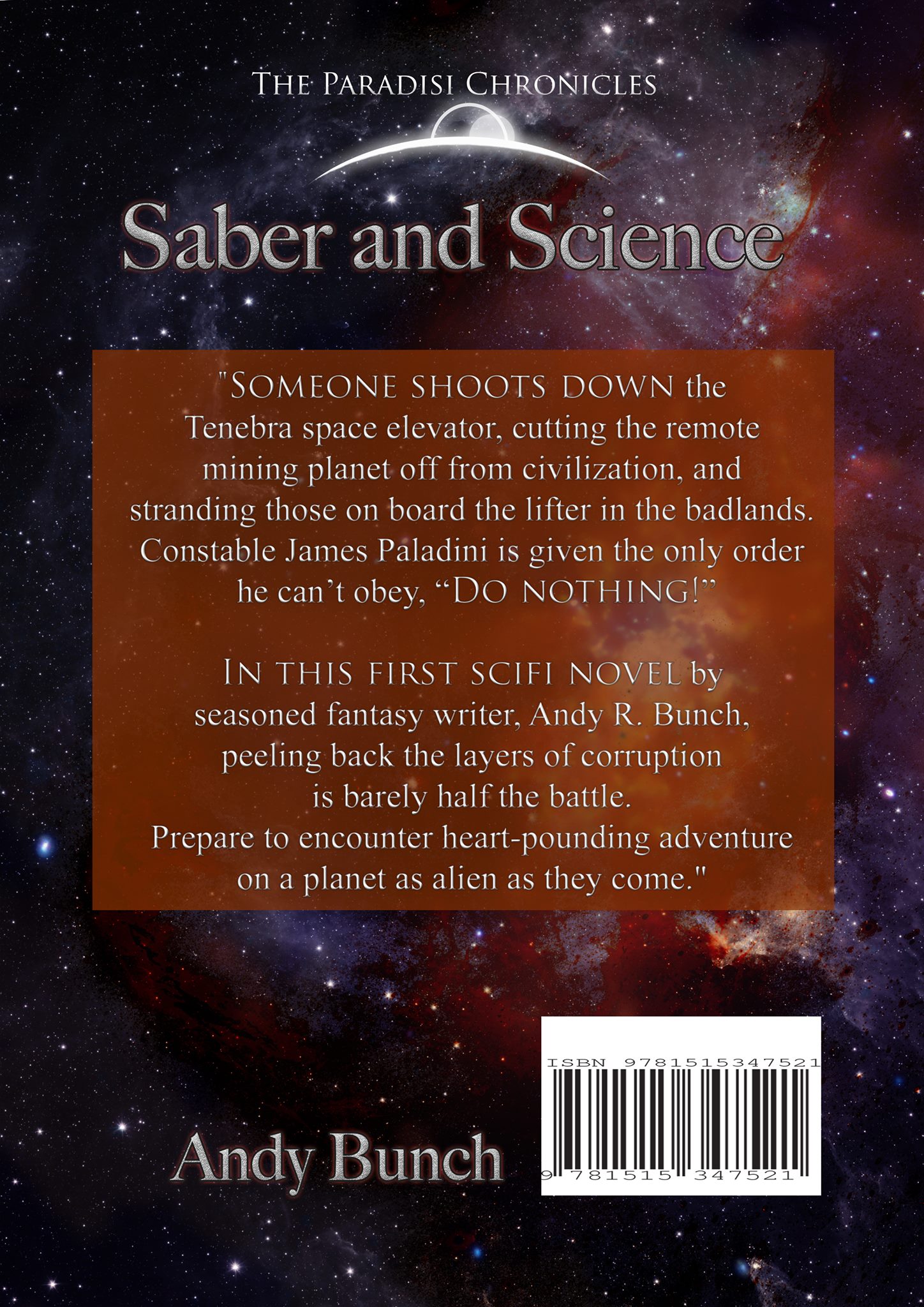
So I’m running a few raffles actually. To support the launch of my Paradisi Chronicles book, Saber and Science. I’ll try to list them all on this site by updating this post. They’ll be coming out one at a time on Facebook, pretty much every day between now and Saturday night.

#1 Grand prize package for September 1st web launch.
<a class=”rcptr” href=”http://www.rafflecopter.com/rafl/display/74bf4e681/&#8221; rel=”nofollow” data-raflid=”74bf4e681″ data-theme=”classic” data-template=”” id=”rcwidget_8gje8gir”>a Rafflecopter giveaway</a>
//widget-prime.rafflecopter.com/launch.js

#2 Door Prize for Launch Day
<a class=”rcptr” href=”http://www.rafflecopter.com/rafl/display/74bf4e682/&#8221; rel=”nofollow” data-raflid=”74bf4e682″ data-theme=”classic” data-template=”” id=”rcwidget_u07r4729″>a Rafflecopter giveaway</a>
//widget-prime.rafflecopter.com/launch.js

Updates coming